Reading TAF
CB - Cumulonimbus clouds - very bad
SCT, Few
https://www.eoas.ubc.ca/courses/atsc113/flying/met_concepts/01-met_concepts/01c-cloud_coverage/index.html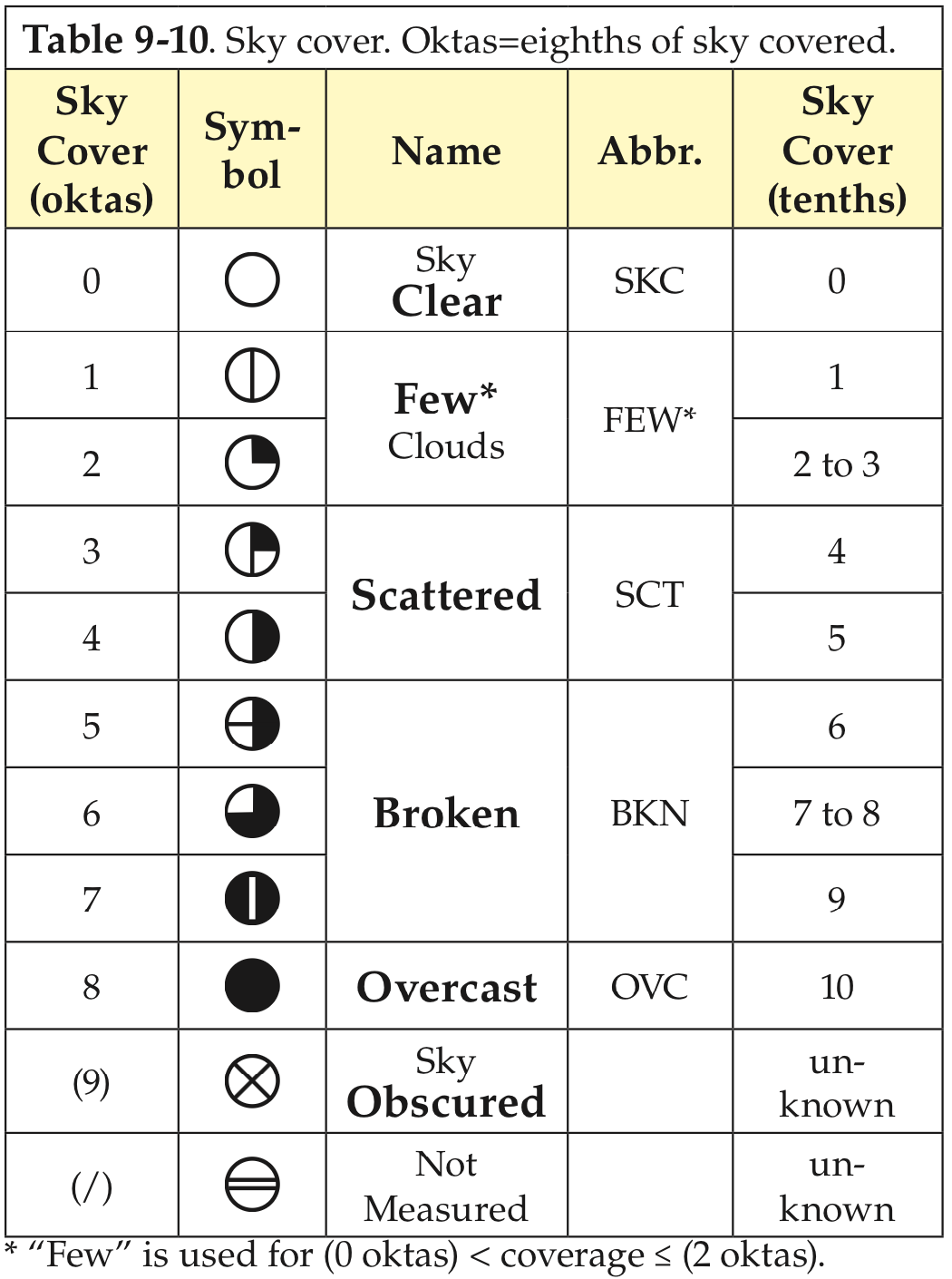
Tempo - means temporary
P6SM - means Plus 6 Statute Miles, basically full vis on a TAF
BR - baby rain... ?
https://www.navcanada.ca/en/cnop-27-jan-2022.pdf
https://www.faa.gov/documentLibrary/media/Advisory_Circular/AC_00-45H.pdf


VRB03KT
Means Variable 3 knot winds
3.1.5.5.1
Wind Gust.
Wind speed data for the most recent 10 minutes is examined to evaluate the
occurrence of gusts. Gusts are defined as rapid fluctuations in wind speed with
a variation of 10 kts or more between peaks and lulls. The coded speed of the
gust is the maximum instantaneous wind speed.
Wind gusts are coded in two or three digits immediately following the wind
speed. Wind gusts are coded in whole knots using the units, tens, and, if
required, the hundreds digit. For example, a wind out of the west at 20 kts
with gusts to 35 kts would be coded 27020G35KT.
3.1.5.5.2
Variable Wind Direction (speed 6 kts or less).
Wind direction may be considered variable when, during the previous
2-minute evaluation period, the wind speed was 6 kts or less. In this case, the
wind may be coded as VRB in place of the three-digit wind direction. For
example, if the wind speed was recorded as 3 kts, it would be coded
VRB03KT.
3.1.5.5.3
Variable Wind Direction (speed greater than 6 kts).
Wind direction may also be considered variable when, during the 2-minute
evaluation period, it varies by 60 degrees or more and the speed is greater than
6 kts. In this case, a variable wind direction group immediately follows the
wind group. The directional variability is coded in a clockwise direction and
consists of the extremes of the wind directions separated by a V. For example,
if the wind is variable from 180 degrees to 240 degrees at 10 kts, it would be
coded 21010KT 180V240.


Comments
Post a Comment